Why Older DeKalb Homes Are Prone to Foundation Problems
If you own a home in DeKalb, there is a good chance your house has stood through decades of freeze-thaw cycles, heavy spring rains, and the slow shifting of clay-rich soil. Homes built before the 1980s were often constructed with poured concrete or block foundations that lacked modern drainage systems, exterior waterproofing membranes, or sump pumps. Over time, these older foundations absorb moisture and begin to show their age in ways that are not always obvious from the outside.
The problem is that foundation damage rarely announces itself with a single dramatic event. Instead, it develops quietly below grade, where most homeowners never look. By the time visible symptoms appear inside the basement or on the first floor, the underlying issue may have been worsening for years. Understanding the common signs of foundation trouble is the first step toward protecting your home and avoiding costly structural repairs down the road.
Basement Wall Cracks: What They Mean and When to Worry
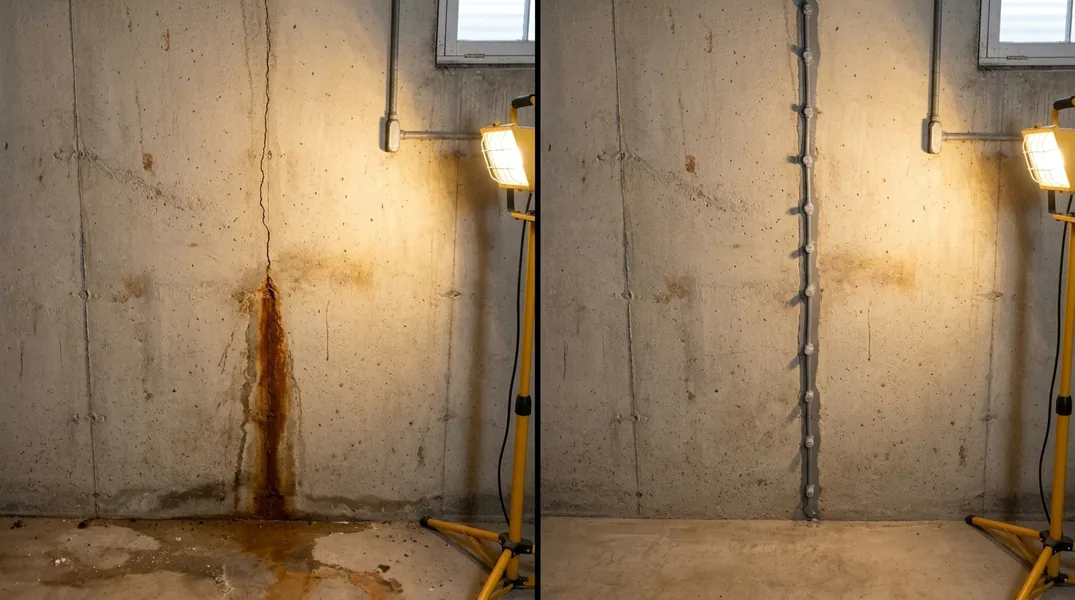
Not all cracks are created equal. Hairline cracks in a concrete basement wall are often caused by normal curing and settlement and may be harmless. However, wider cracks, horizontal cracks, and cracks that leak water are red flags. Vertical cracks that widen toward the bottom can indicate uneven settling, while horizontal cracks are frequently a sign of soil pressure pushing against the wall. Stair-step cracks in block foundations are especially concerning because they often point to differential movement of the footing.
If you notice any crack that is wider than a quarter inch, actively seeping water, or accompanied by efflorescence (the white chalky powder left behind by evaporating moisture), it is time to have a professional evaluate your foundation. Ignoring these signs can lead to structural instability and much more expensive repairs. A thorough inspection can determine whether the issue is cosmetic or a symptom of a deeper problem that requires Foundation Waterproofing.
Bowing Basement Walls and Other Structural Warning Signs
A bowing basement wall is one of the most serious signs of foundation trouble in older homes. When hydrostatic pressure from saturated soil builds up outside the wall, it can push the wall inward, causing it to bow or lean. You may notice that the wall is no longer plumb when you hold a level against it, or you may see horizontal cracks along the middle of the wall. In severe cases, the wall may visibly curve inward, and the floor joists above may begin to shift or squeak.
Other structural warning signs include doors and windows that stick or no longer latch properly, cracks in the drywall above door frames, and uneven or sloping floors. These symptoms often indicate that the foundation is moving and that the structure above is being affected. If you observe any of these issues in your home, it is important to act quickly. Addressing a bowing basement wall early can prevent the need for costly wall replacement or foundation reconstruction later.
Historic Home Waterproofing: Protecting DeKalb's Older Properties
DeKalb is home to many historic homes, and these properties often have unique waterproofing challenges. Older homes may have stone or brick foundations that were never designed to handle modern water tables, and some may have fieldstone walls that are particularly vulnerable to moisture intrusion. Historic home waterproofing requires a careful approach that respects the original construction while improving drainage and moisture control. Modern solutions like interior drain tile systems and exterior waterproofing can be adapted to work with older materials without compromising the home's character.
If you own a historic home in Sycamore or the surrounding areas, it is especially important to work with a contractor who understands older construction methods. A proper assessment will identify whether your home needs Basement Waterproofing to keep the space dry, or whether a more comprehensive approach is needed to stabilize the foundation. Protecting these homes is about preserving both their structure and their history.
Basement Waterproofing Near Me: When to Call a Professional
If you have noticed any of the warning signs discussed above, it is time to call a professional. While small hairline cracks can sometimes be monitored, issues like bowing walls, persistent leaks, and horizontal cracks require expert attention. A qualified contractor can perform a detailed inspection, explain the cause of the problem, and recommend the right solution for your home. In many cases, an Interior Drain Tile System can effectively manage water and relieve pressure, while Exterior Basement Waterproofing may be necessary to address the source of the moisture from the outside.
Do not wait until a small crack becomes a structural emergency. DeKalb Waterproofing offers thorough inspections and customized solutions for homeowners in Genoa, Cortland, and throughout the DeKalb area. To schedule a free estimate or to learn more about pricing, call (815) 981-3342 today. Protecting your home starts with knowing what to look for and acting before the damage spreads.
Looking for a professional basement waterproofing contractor in DeKalb? DeKalb Waterproofing responds fast for all your basement waterproofing needs.
Get a Free QuoteOur services: Basement Waterproofing · Interior Drain Tile System · Exterior Basement Waterproofing