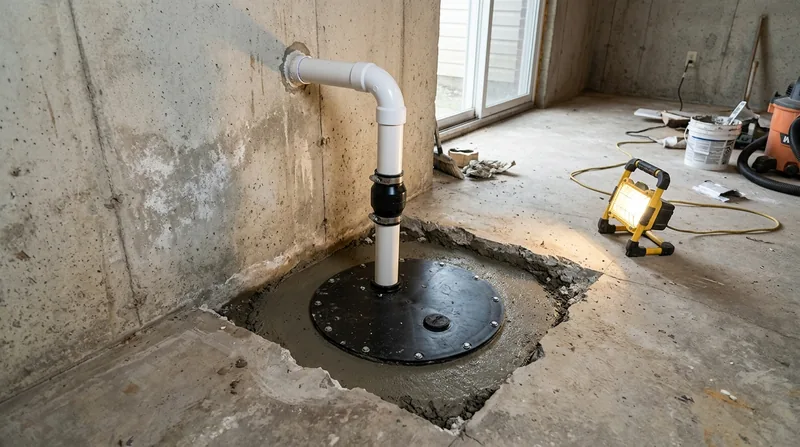


DeKalb sits on glacial till clay loam that drains slowly and holds spring water near the surface. In the older brick and frame houses near downtown and along the streets by the Kishwaukee River, that water pushes through stone and early block footings and lands in full basements that were never built for it. On the north and west sides, 1950s to 1970s ranches and split-levels have poured or block basements, many partly finished, where a failed pump means wet carpet and ruined drywall by morning. When you need Sump Pump Installation & Replacement in DeKalb, you need a pump sized for the actual inflow, a sealed basin, and a discharge line that will not freeze shut in February. We handle sump work as a dedicated below-grade trade, not as an add-on to a plumbing call. If you are already seeing seepage at the wall base, start with our basement waterproofing service and we will tell you plainly whether the pump alone is the fix.
Why Sump Pump Failure Hits DeKalb Basements Harder Than Most
The dominant failure mode here is not a pump that never worked. It is a pump that ran fine through a dry summer, then met late-winter snowmelt and a rising Kishwaukee and could not keep up. Clay loam releases water slowly, so the inflow arrives over days, not hours, and an undersized pump or a half-clogged basin runs continuously until the motor cooks. Freeze-thaw cycles open old mortar joints and let more water reach the footing, which is exactly when the pump is working hardest.
- Subdivisions on the edges of town with poured full basements often have a single 1/3 HP pump that was builder-grade from day one.
- Older homes near downtown may have no basin at all, just a shallow pit that fills and overflows during spring rain.
- Discharge lines that dump two feet from the foundation send the same water straight back to the footing.
- Walkout lots on the sloped ground near the river collect surface water at the low wall, and the pump becomes the only outlet.
Any one of these turns a wet basement into a recurring problem until the pump, basin, and discharge are corrected together.
Key info: A ranch off Dresser Road in DeKalb had a 1/3 HP pump in an unsealed basin. It handled normal rain but lost ground during the March snowmelt, and the finished half of the basement took on an inch of water. The fix was a 1/2 HP cast-iron pump, a sealed lid, and a discharge line run to daylight past the grade break.
Permits for work that alters drainage or the sanitary connection of a sump discharge vary by jurisdiction, so confirm the current requirement with the City of DeKalb building department before work starts.
How We Install or Replace a Sump Pump in a DeKalb Basement
We start by measuring what the pump actually has to move. That means watching the basin during a wet period, checking the inflow rate, and looking at where the discharge can legally and practically go. A pump that is oversized for the inflow short-cycles and burns out; one that is undersized runs nonstop. We size to the basin and the water, not to a shelf label.
- We inspect the existing basin, pump, check valve, and discharge line, and note whether the basin is sealed or open.
- We cut and set a properly sized basin where none exists, tied into the footing drain or interior perimeter drain as needed.
- We set the new pump on a solid base, install a check valve, and seal the lid to keep debris and humidity out of the pit.
- We route the discharge line with freeze protection in mind, pitched to daylight or a frost-free outlet.
- We test through a full fill-and-empty cycle and confirm the float trips at the right level before we leave.
If the basin is sound but the pump is tired, replacement is a same-day job. If the pit itself is wrong, we rebuild it rather than drop a new pump into a bad hole.
Key info: On a split-level in the 60115 ZIP code, the old discharge ran into a shallow gravel trench that froze solid in January and backed water into the basin. We rerouted it to a sloped line exiting above the frost line, and the pump has run clean through two winters since.
If you are also dealing with a wet perimeter, our interior drain tile system feeds the same basin and is worth pricing at the same visit.
Sump Pump Approaches We Use in DeKalb County
Not every basement needs the same setup. The right choice depends on the foundation type, the inflow, and whether the basement is finished. Here is how the common approaches compare.
| Approach | Description | Best for |
|---|---|---|
| Straight pump replacement | Swap the pump and check valve in an existing sound basin | Basin is correct, pump is old or dead |
| New basin and pump | Cut and set a sealed basin tied to the drain tile | No pit, shallow pit, or open pit in a finished basement |
| Discharge line correction | Reroute the outlet with freeze protection and proper pitch | Short-cycling, frozen line, or water returning to the footing |
| High-capacity upgrade | Larger pump and basin sized to measured inflow | Walkouts and river-side lots with heavy spring inflow |
We recommend the smallest setup that actually handles the water, because an oversized pump in a small basin is its own failure mode.
Sump Pump Installation & Replacement Cost in DeKalb: What to Expect
Most straightforward pump replacements in DeKalb start at From $1,200, which covers a quality cast-iron pump, a new check valve, a sealed lid, and testing. The number moves with the basin, not the pump. A new basin cut into a poured floor, a long discharge run, or a high-capacity unit for a walkout lot all add labor and material. Finished basements take longer because we protect flooring and drywall on the way in and out.
Get two or three estimates and compare what is actually included. A quote that lists only a pump model tells you nothing about the basin, the check valve, or the discharge route. Ask each contractor to state the pump size, the basin type, and where the discharge will exit. For a fuller breakdown of typical ranges, see our pricing page.
What to Look For When Hiring a Sump Pump Contractor Near Me in DeKalb
Ask for proof of licensing and insurance before anyone touches your basement, and get a certificate of insurance sent directly from the carrier. Confirm the contractor does below-grade work as a specialty, not as a side job between plumbing calls. Check references from jobs in DeKalb or the surrounding towns, and ask specifically about winter performance, since a pump that passed a summer test can still fail in a snowmelt. Understand what permits apply to your discharge routing by calling the building department yourself. Get the scope in writing, including pump size and discharge location, before you sign.
Ready to get a real number? Reach out through our contact page and we will schedule a look at your basin and discharge.
Sump Pump Installation & Replacement in DeKalb: Pricing Guide
| Service | Price | Details |
|---|---|---|
| Pump replacement only | Starting at $1,200 | Quality cast-iron pump, check valve, sealed lid, and full cycle test in an existing sound basin |
| New basin and pump | Starting at $1,850 | Cut and set a sealed basin tied to drain tile, with pump and discharge routed to daylight |
| High-capacity upgrade | On estimate | Sized to measured inflow for walkout or river-side lots, priced after an on-site flow check |
| Discharge line correction | Starting at $650 | Reroute with freeze protection and proper pitch when the line short-cycles or backs up |
| Travel | Included | In DeKalb and surrounding areas, no separate call-out or mileage fee |
| Estimate | Free | Response within 24h at (815) 981-3342, no obligation to book |
Indicative pricing, the exact cost depends on square footage, finish, and site access. Free personalized estimate within 24h at (815) 981-3342.


