The Soil Under Your Feet: A Short History of Glacial Till
If you live in DeKalb, you are standing on ground that was shaped by ice. Thousands of years ago, glaciers pushed down across what is now northern Illinois, grinding rock into a dense, unsorted mixture of clay, silt, sand, and gravel. Geologists call this glacial till, and it is the single biggest reason so many basements in our area struggle with water.
Unlike sandy soils that let water drain away quickly, glacial till is tightly packed. The clay particles act like a lid, slowing down how fast water can move through the ground. When it rains or when snow melts, that water has nowhere to go but sideways, and eventually it finds the path of least resistance: your foundation wall. Understanding this is the first step toward solving DeKalb basement leaks for good.
Clay Loam and the Slow-Motion Water Problem
On top of the glacial till, many properties around here have a layer of clay loam. This soil is great for growing corn and soybeans, but it is terrible at draining. When the ground is saturated, the clay loam holds water like a sponge that has already soaked up everything it can. The excess presses against your foundation, and hydrostatic pressure builds up.
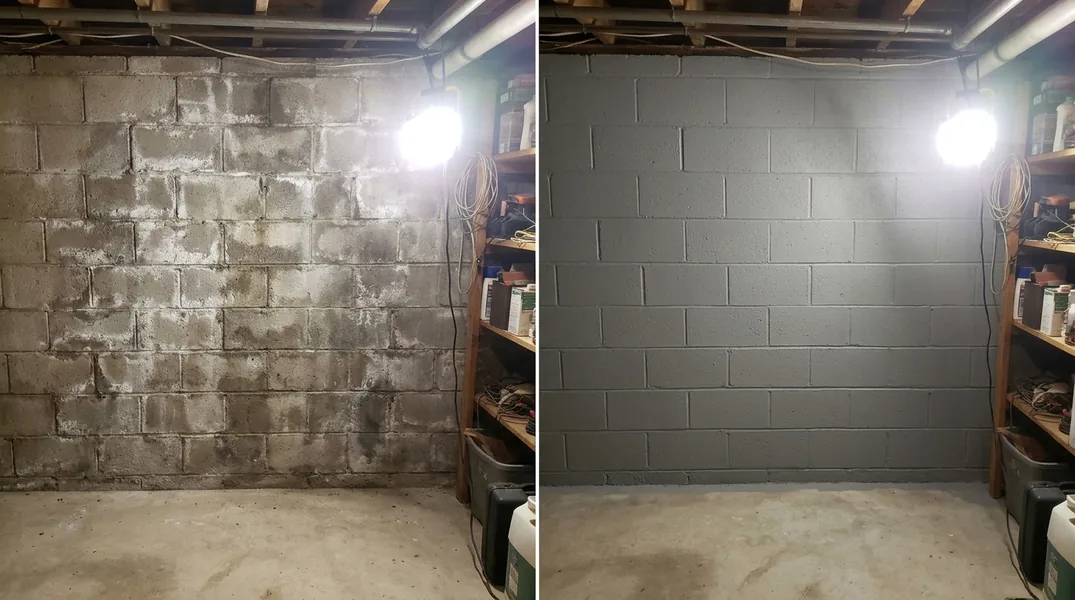
That pressure is relentless. It pushes against basement walls, seeps through hairline cracks, and works its way into the joint where the wall meets the floor. Homeowners often notice dampness after a heavy spring rain, then forget about it until the next storm. Over time, that cycle of wetting and drying weakens concrete and mortar. If you have noticed a musty smell or white powdery stains on your walls, the clay loam is likely doing its slow work. A professional assessment of your Foundation Waterproofing needs is the smart next step.
Why Illinois Basement Water Shows Up When You Least Expect It
Illinois weather is hard on foundations. We get freeze-thaw cycles that open tiny cracks, heavy summer downpours that overwhelm gutters, and spring snowmelt that saturates the soil for weeks. Each of these events sends water toward your basement. Because the clay loam drains so slowly, the water lingers, and that is when Illinois basement water problems become obvious.
Many homeowners in Sycamore and Genoa call us after a storm because their sump pump ran nonstop or their carpet got wet. By then, the water has usually been seeping in for a while. The earlier you address the cause, the less damage you will face. If you are seeing water where you never saw it before, it is worth getting a free estimate before the next big rain.
Basement Leak Causes: What We Actually Find in DeKalb Homes
When we inspect a home, we look for the usual suspects. Cracked poured concrete walls are common, especially in homes built in the last forty years. Block foundations from older neighborhoods tend to leak at the mortar joints. Window wells fill up with debris and trap water against the wall. Downspouts discharge too close to the house, and grading slopes back toward the foundation instead of away from it.
But the root cause is almost always the same: water cannot escape through the clay loam, so it takes the path of least resistance into your basement. That is why patching a crack from the inside rarely solves the problem for long. The water simply finds another way in. A lasting fix means managing the water before it reaches the wall or giving it a reliable path to drain away. That is where a properly designed Interior Drain Tile System or an Exterior Basement Waterproofing solution comes in.
Basement Waterproofing Near Me: When to Call a Pro
Not every damp basement needs a major project. Sometimes regrading the yard, extending downspouts, and sealing cracks will make a real difference. But if you are seeing water on the floor after storms, efflorescence on the walls, or a sump pump that runs constantly, it is time to call a professional. These are signs that the water pressure outside your foundation is more than your home can handle on its own.
At DeKalb Waterproofing, we serve homeowners throughout Cortland and the surrounding area. We start with a thorough inspection, explain what we find in plain language, and recommend the least invasive solution that will actually work. Whether that means interior drainage, exterior excavation, or targeted repairs, we focus on fixing the cause rather than hiding the symptoms. Call (815) 981-3342 to schedule a visit, or reach out online for a free estimate.
Basement Waterproofing Cost in DeKalb: What to Budget
Homeowners often ask what pricing looks like before they commit to a project. The honest answer is that it depends on the size of your basement, the type of foundation, and the source of the water. A simple crack injection costs far less than a full perimeter drain tile system. Exterior work involves excavation and is typically more involved than interior solutions.
What we can tell you is that waiting usually costs more. Water damage leads to mold, ruined flooring, and structural repairs that add up quickly. Addressing the leak early protects your home and your budget. We provide clear, written estimates so you know exactly what you are paying for before any work begins. If you would like to understand your options and get a realistic number for your home, contact DeKalb Waterproofing at (815) 981-3342 or request a free estimate today.
Looking for a professional basement waterproofing contractor in DeKalb? DeKalb Waterproofing responds fast for all your basement waterproofing needs.
Get a Free QuoteOur services: Basement Waterproofing · Interior Drain Tile System · Exterior Basement Waterproofing